How three words and $15 helped sell a $70,000 Volkswagen
A dealership with 3% of its region, no useful digital traffic and about $400 of media budget. Three months later: 3.5× monthly sales, roughly 10% share, and one $70,000 Arteon sold on the back of three words.


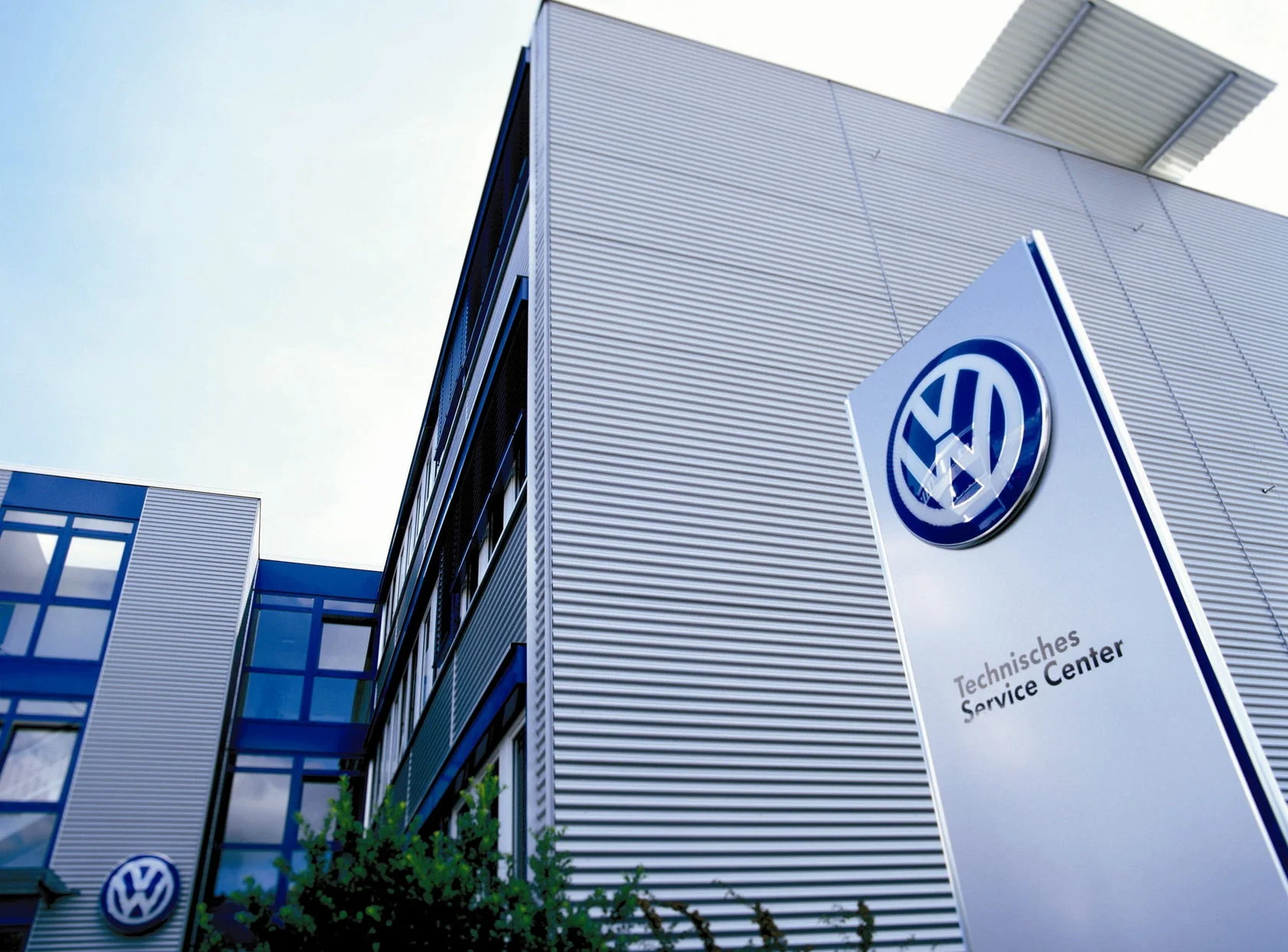
One of two official Volkswagen dealerships in the Odesa region had roughly 3% of the local market, almost no useful digital traffic and a marketing budget that could most politely be described as economical.
Three months later, monthly car sales had increased 3.5× and the dealership's estimated regional share had grown from roughly 3% to 10%.
Total marketing spend for the project: about $400.
And somewhere in the middle of it, fifteen dollars and three words helped find a buyer for a $70,000 Volkswagen Arteon.
People were buying Volkswagens. Somewhere else.
Volkswagen's own market data suggested that the region should comfortably support a certain number of new-car sales every month.
There were two official dealerships.
One was selling roughly half of the expected volume.
The other — ours — was selling around 1/35.
So there wasn't a mysterious absence of demand. People in Odesa were buying Volkswagens perfectly well.
They were simply buying them somewhere else.
There was no meaningful budget for solving this with brute force, which removed the traditional option of buying enough advertising to make the problem temporarily disappear behind a large invoice.
So we had to be slightly more intelligent about it.
Paid per test drive, not per car
We worked on a performance basis.
Our paid result was a booked test drive, not a sold car. Once somebody arrived at the dealership, the sales team took over and our influence largely ended.
Tying our compensation to the final sale would have made us responsible for somebody else's part of the funnel.
That seemed silly then. It still does.
First, fix the traffic we already had
AUTO.RIA was one of Ukraine's largest automotive marketplaces and already contained exactly the people we wanted: people actively looking for cars.
The dealership's listings were there.
Technically.
We replaced sterile catalogue images with proper photography, rewrote the descriptions and rebuilt the listings around the marketplace's organic ranking mechanics.
This was not exactly the Manhattan Project.
The cars became easier to find, easier to compare and considerably less boring to look at.
Traffic started moving without us having to buy it.
A good place to begin when money is scarce.
The official website was useless. Unfortunately, it was also untouchable.
The obvious next problem was Volkswagen's corporate dealership website.
It did many things.
Selling these particular cars was not among its more obvious talents.
Normally, you would improve the website.
Except dealership rules meant we couldn't meaningfully change it.
Building an independent replacement to sell Volkswagen cars directly was also forbidden.
So we stopped trying to sell cars online.
Instead, we built a very simple website whose entire job was to produce test drives.
See the car. Understand why it might be interesting. Book a drive.
That was enough.
When the front door is welded shut, redesigning the handle is rarely the best use of everyone's afternoon.
Then we had to sell an Arteon
Facebook was not exactly bursting with life either.
The dealership had several thousand followers, although judging by the activity most of them appeared to have been cryogenically frozen.
A normal post received perhaps three likes.
Comments were something historians studied.
And sitting in the showroom was a Volkswagen Arteon costing around $70,000.
This presented a small positioning problem.
At that price, a buyer could have an Audi.
Or a BMW.
Volkswagen had produced a handsome, fast sports sedan and then placed it directly beside two badges people had spent decades learning to desire more.
Trying to pretend otherwise would have been optimistic.
So we looked for the one part of the comparison where the Arteon had something entertaining to say.
There was one.
And we reduced the entire proposition to three words:
“The Fastest German.”
Strictly speaking, this required enough context to start an argument.
Fortunately, Facebook provides arguments free of charge.
Fifteen dollars well spent
We created two simple ads. One challenged Audi. The other challenged BMW.
And then something wonderful happened.
Owners of German premium cars arrived to tell us we were idiots.
They argued about engines. They argued about specifications. They tagged friends. They defended their brands with the sort of emotional commitment normally reserved for football clubs and minor territorial disputes.
Which was precisely what the dealership's social media had been missing.
More importantly, people began booking test drives.
Many of them arrived asking essentially the same thing:
“So, is it really the fastest German?”
For $15, we had not bought many impressions.
We had bought a conversation.
Two weeks later, the Arteon left the showroom with a new owner.
Did two Facebook ads single-handedly sell a $70,000 car?
Of course not.
A car purchase involves rather more than clicking a sponsored post while sitting on the toilet.
But those ads gave an otherwise difficult car a reason to be noticed, discussed and driven.
And the test drive was the result we were actually being paid to create.
Over three months
Views of the dealership's vehicle listings and traffic into the new test-drive funnel also rose sharply.
We could decorate this section with an enormous ROI percentage.
We won't.
The dealership had not measured the previous funnel well enough to give us a trustworthy baseline, and inventing one retrospectively would merely produce a very impressive number with no particular relationship to reality.
There are already enough of those in marketing.